

For years, Australians have had it pretty good when it comes to computer prices. Even with global chip shortages and supply chain disruptions, laptops and desktops remained relatively affordable compared to many other countries. That balance is now shifting, and the change is coming faster than most people expect.

A major reason behind this shift is the sharp increase in DDR5 RAM prices, which is already sending ripples through the global electronics industry. Those ripples are now heading straight for Australian consumers.
The DDR5 RAM Price Surge Is Real
DDR5 memory has become the new standard for modern laptops and desktops, particularly those released over the last couple of years. Unfortunately, its price has risen dramatically. In many cases, DDR5 RAM now costs close to three times what it did previously.
This is not a short-term spike. Global manufacturers have tightened production while prioritising higher-margin sectors such as artificial intelligence and enterprise data centres. At the same time, older DDR4 memory is being phased out, reducing lower-cost alternatives.
Even computer repair businesses across Australia are finding it harder to source affordable DDR5 memory, which is a clear sign that pricing pressure is not easing anytime soon.
Big Brands Will Pass Costs to Customers
When component prices rise at this scale, manufacturers do not absorb the cost. Major laptop brands including HP, ASUS and Acer have already signalled that higher production costs will be passed on to customers from 2026.
This follows a familiar pattern in the electronics industry. When parts become more expensive, retail prices rise soon after. Australian buyers should be prepared for that reality.
What This Means for Australian Laptop Prices
At the moment, a reliable everyday laptop in Australia typically costs between $800 and $1,500. Based on current industry pricing and supplier forecasts, that same category of device is expected to push closer to the $1,500 to $2,000 range over the next couple of years.
That represents an increase of roughly 30 to 40 percent, without necessarily delivering major performance improvements for most users. With cost-of-living pressures already high, this will make replacing a computer far more challenging for many households.
Why Repairing Is Often the Smarter Choice
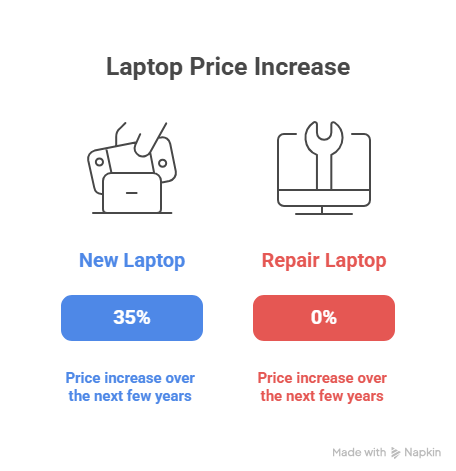
With new device prices climbing, repairing an existing laptop or desktop is becoming the more practical option for many Australians.
A cracked or flickering display, for example, doesn’t mean the whole laptop is finished. In many cases, a proper laptop screen repair gets the machine back to full use for far less than the cost of replacing it.
The same goes for battery issues. If your laptop won’t hold charge, shuts down unexpectedly, or only runs while plugged in, a battery replacement service is often the simplest and most cost-effective fix.
Keyboard faults are another one that pushes people into unnecessary upgrades. If keys are sticking, repeating, or not responding properly, you can usually solve it with a MacBook Pro keyboard repair instead of buying a new machine.
Liquid Damage and Overheating Are Bigger Problems Than People Think
A lot of laptops that “randomly died” were actually exposed to liquid at some point, even if it was only a small spill. The earlier it’s assessed, the better the chance of preventing corrosion from spreading. If that’s the issue, liquid damage repair can be the difference between saving the device or losing it completely.
Overheating is another silent killer. Some people notice loud fan noise or sudden shutdowns during games or work calls and assume the laptop is getting old. Often it’s dust buildup, thermal paste issues, or cooling failure that can be fixed through a proper computer overheating service.
Slow Performance Doesn’t Always Mean You Need a New Laptop
Plenty of people replace a laptop simply because it feels sluggish. In reality, slow performance is often caused by fixable issues like storage wear, system corruption, or overheating.
If your device is lagging, freezing, or taking ages to boot, it’s worth checking a slow-running laptop repair before spending big money on a replacement, especially with prices heading north.
The Practical Advantage Most People Overlook
Beyond the cost savings, repairing an existing computer avoids a major headache. You don’t need to transfer data, reinstall software, or reconfigure email accounts and apps. Everything stays as it is, which saves time and avoids the usual frustration that comes with setting up a brand-new machine.
For professionals, students and small business owners, that continuity can be just as valuable as the financial savings.
A Smarter Way Forward
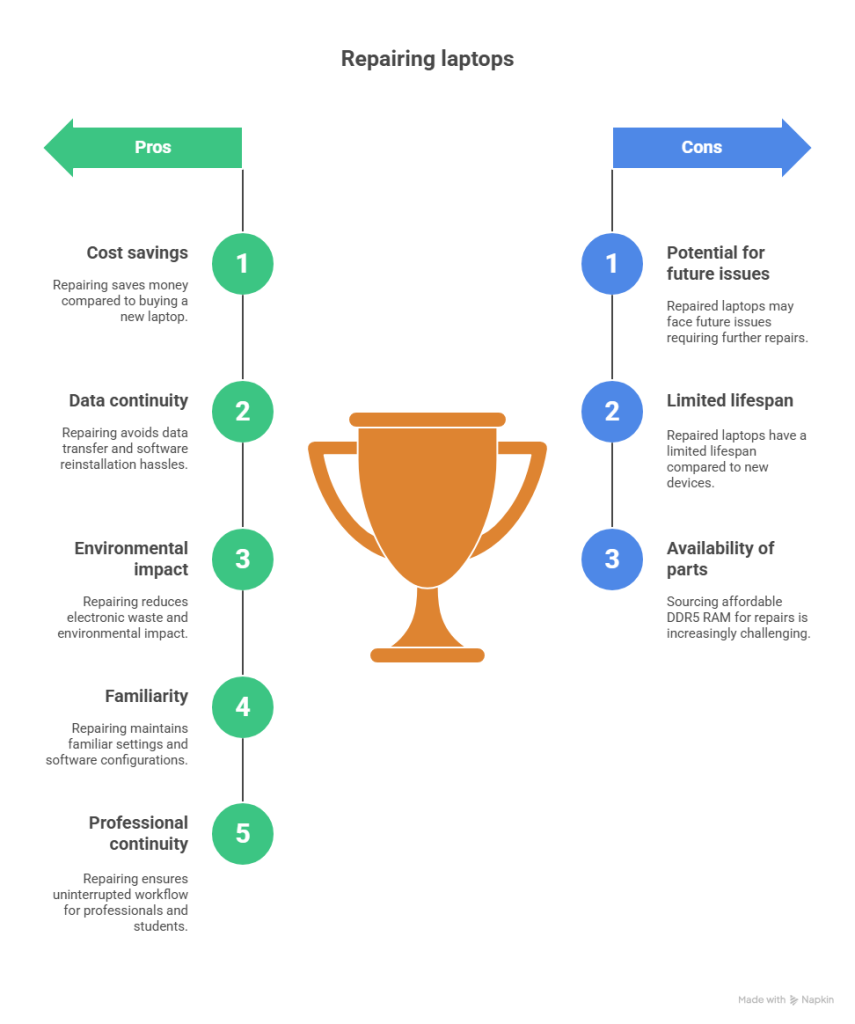
Australia has enjoyed relatively low computer prices for a long time, but that chapter is closing. With DDR5 RAM prices surging and manufacturers preparing price increases, buying new will no longer be the easy default choice.
For the next few years, repairing where possible and upgrading selectively makes far more sense. It is a practical response to a market that is clearly shifting.
At Geeks Callout, the focus is simple. Help Australians keep their technology running longer, avoid unnecessary replacement costs and get the most value from the devices they already own.